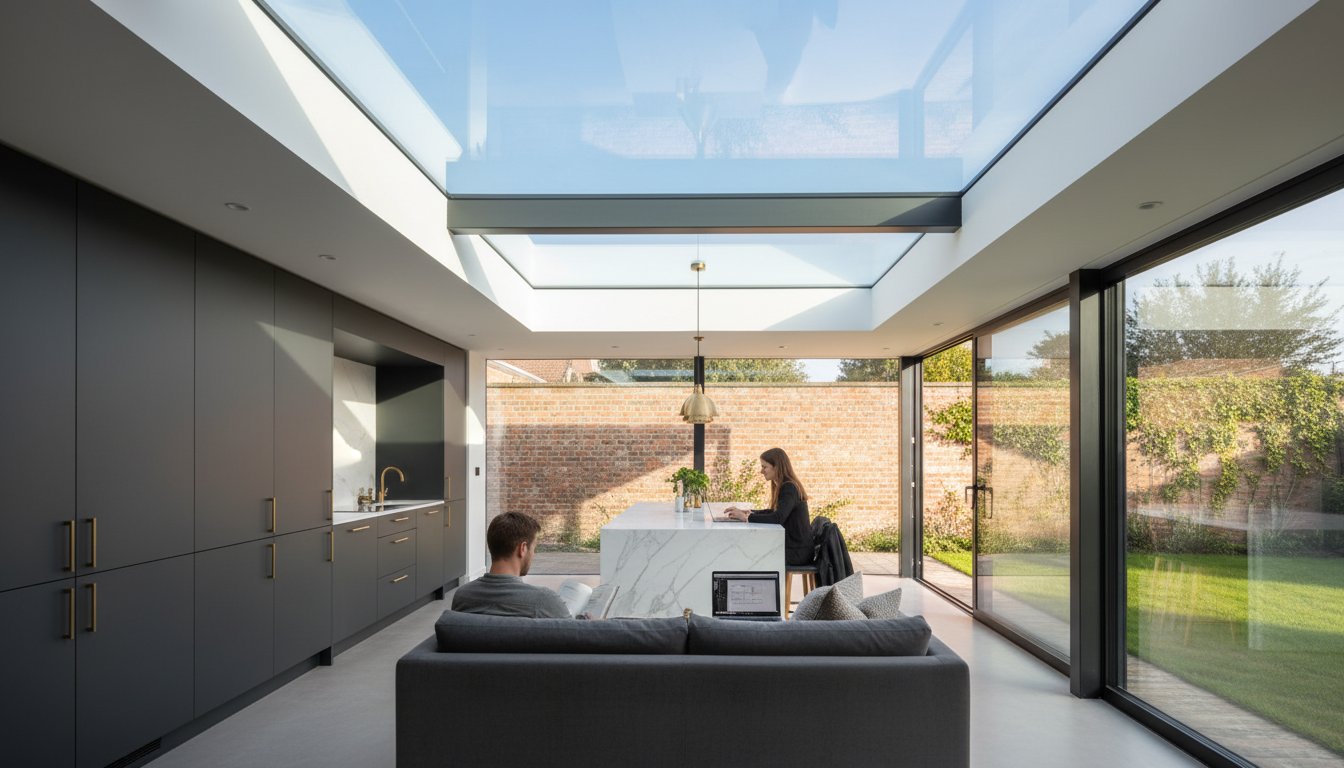
What if your stunning new extension felt less like a designer sanctuary and more like a greenhouse by mid-morning? It's a common concern for homeowners across the county, especially when planning those large, light-filled living spaces. While we all want to maximise natural light, nobody wants to deal with the stifling heat or the constant glare on laptop screens that often comes with it. Choosing the right solar control glass for aluminium flat roof lights in Cheshire is no longer just an optional upgrade; it's the essential engine that makes your architectural investment work every single day of the year.
You've likely spent months perfecting your floor plans, and you deserve a room that stays cool in July and warm in January without relying on expensive climate control. This 2026 guide will help you understand the latest Building Regulations, including the 1.6 W/m²K U-value requirements for new builds, and how specific G-values can prevent your furniture from fading under UV rays. We'll show you how to achieve that bright, airy atmosphere whilst maintaining total thermal control and a premium architectural finish for your home.
Key Takeaways
- Learn how microscopic glass coatings reflect solar heat to keep your living space comfortable without sacrificing stunning, clear views of the sky.
- Understand how G-values and 2026 Building Regulations impact your choice of solar control glass for aluminium flat roof lights in Cheshire to ensure your extension remains energy efficient.
- Discover why the orientation of your home, from south-facing sun-traps in Wilmslow to north-facing kitchens in Knutsford, dictates your specific glazing requirements.
- Dismiss the myth of "office-style" tinted glass and explore how modern solar control solutions maintain a neutral, high-end architectural finish.
- Realise the importance of professional installation by local experts to guarantee a perfect thermal seal and long-term durability for your investment.
What is Solar Control Glass for Aluminium Flat Roof Lights?
Solar control glass is a high-performance glazing solution featuring a microscopic, metallic coating designed specifically to reflect solar heat back outside. Unlike standard double glazing, which primarily focuses on retaining internal warmth, solar control glass prioritises heat reflection. This technology relies on sophisticated Low-emissivity coatings that allow visible light to pass through whilst blocking a significant portion of the sun's infrared radiation. For homeowners installing solar control glass for aluminium flat roof lights in Cheshire, this means enjoying a bright, sun-drenched room without the uncomfortable temperature spikes usually associated with large glass surfaces.
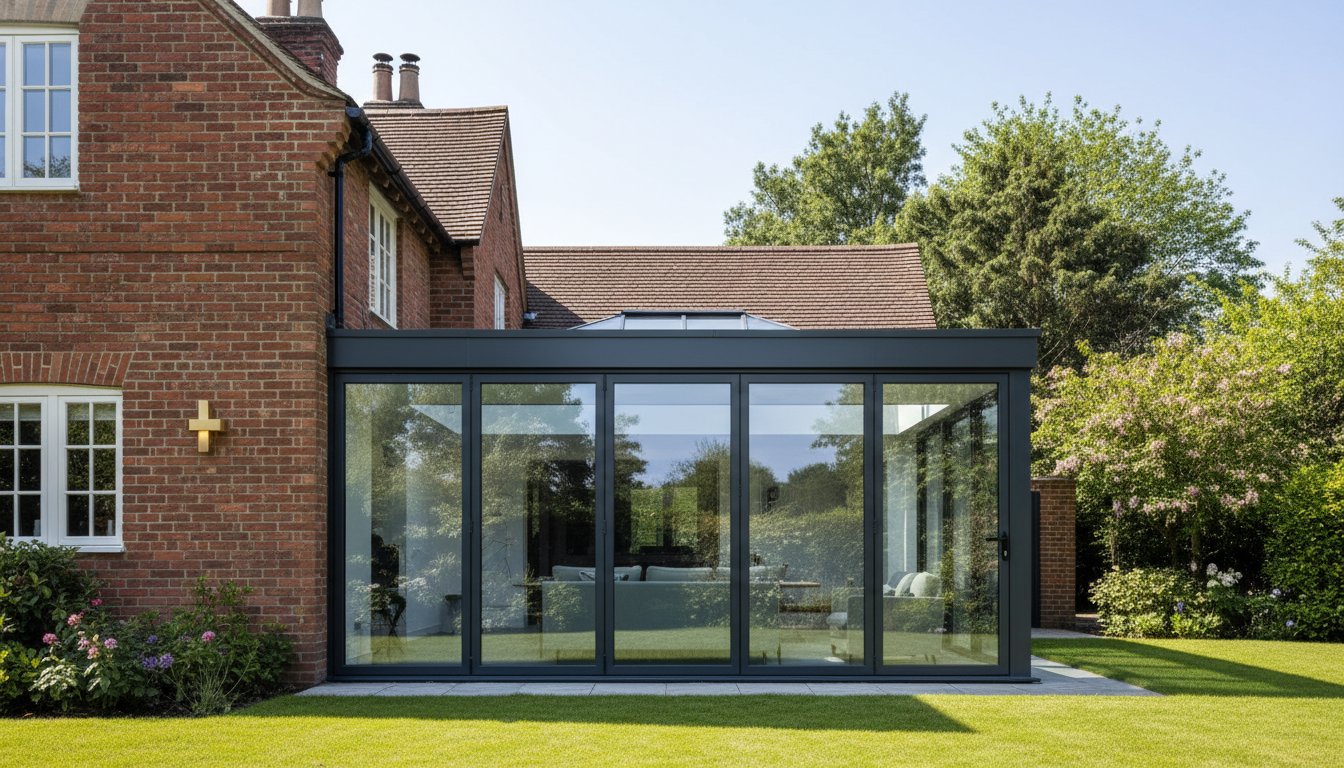
The frame choice is just as critical as the glass itself. Slimline aluminium is the perfect partner for these heavy, high-specification units because of its inherent strength and durability. It allows for larger spans of glass with minimal sightlines, ensuring that your view of the Cheshire sky remains unobstructed. Local homeowners are increasingly opting for this combination for their open-plan kitchen diners and orangeries, seeking a seamless blend of modern aesthetics and practical thermal performance. It's a smart way to ensure your investment adds genuine value to your property.
The "Greenhouse Effect" in Modern Extensions
Flat roof lights are particularly susceptible to solar gain because they face the sun directly from above for the majority of the day. Unlike vertical windows, which might be shaded by eaves or neighbouring buildings, roof lights receive the full intensity of peak summer sun. Without the right protection, large glass spans can cause internal temperatures to soar, making the room feel unusable by midday. The greenhouse effect is the trapping of short-wave solar radiation. In an extension with standard glass, this energy enters the room, hits your surfaces, and turns into heat that cannot escape, leaving you with a stifling environment that feels more like a sauna than a sanctuary.
Key Benefits: Cooling, Comfort, and UV Protection
One of the biggest advantages of choosing solar control glass for aluminium flat roof lights in Cheshire is the significant reduction in the need for expensive air conditioning or heavy, unsightly blinds. By managing heat at the source, you maintain a steady, comfortable temperature throughout the day. This glass also acts as a shield for your favourite Cheshire interiors. UV rays are notorious for fading expensive hardwood flooring and designer furniture; solar control glass filters these rays, protecting your investment from sun damage. Ultimately, it improves the daily liveability of your home, whether you're working from home at a desk or hosting a Sunday lunch. It transforms a seasonal space into a genuine year-round feature.
Understanding the Technical Specs: G-Values and U-Values
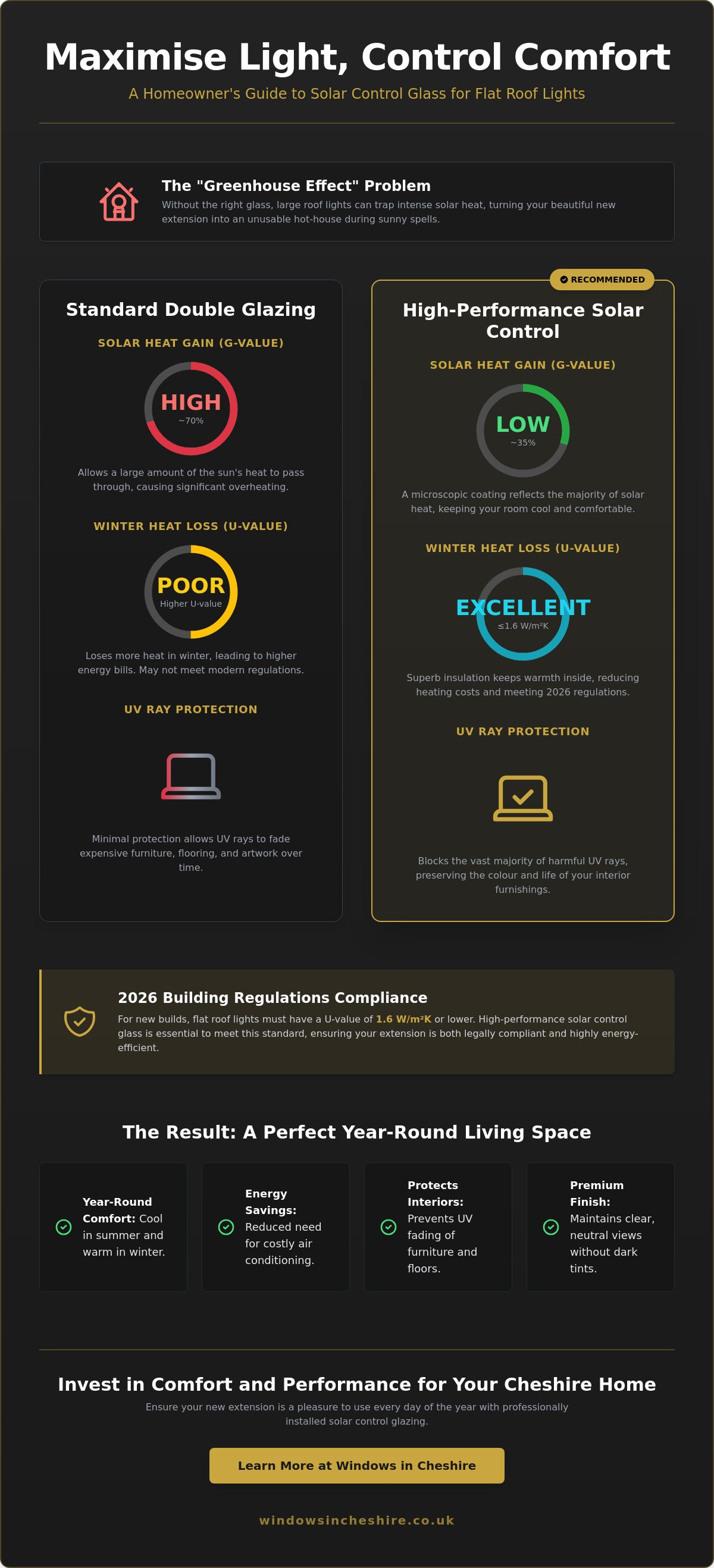
Choosing solar control glass for aluminium flat roof lights in Cheshire requires a basic understanding of two critical numbers: the G-value and the U-value. While these might sound like industry jargon, they're the primary metrics that determine how your room will feel on a scorching July afternoon or a freezing January morning. The G-value measures the percentage of solar heat that passes through your glass. For our temperate UK climate, a G-value between 0.30 and 0.37 is usually the target. This ensures that only about a third of the sun's heat energy enters your home, preventing that uncomfortable "hot house" feeling.
The U-value, on the other hand, measures how quickly heat escapes from your room to the outside. This is where modern standards have become much stricter. Under the latest Approved Document L building regulations, new build dwellings in 2026 must achieve a maximum U-value of 1.6 W/m²K for flat rooflights. If you're replacing an existing unit, the limit is 1.8 W/m²K. These regulations ensure that your extension isn't just beautiful, but also legally compliant and exceptionally energy efficient.
Light Transmission (LT) is the final piece of the technical puzzle. It's a delicate balance. Whilst you want to keep the heat out, you don't want to lose the vibrant, natural light that makes a kitchen extension feel so inviting. Modern solar coatings are now so advanced they can reject over 60% of solar heat whilst maintaining an LT of around 70%. This ensures your room remains bright and airy without looking like a tinted commercial office building.
The Ideal Performance Balance for Cheshire Homes
A G-value of around 0.4 is often the "sweet spot" for homes in areas like Wilmslow or Knutsford. It provides enough protection for south-facing sun-traps without making the room feel cold during the spring. Whilst triple glazing can further improve U-values, high-specification solar double glazing often offers the best balance of weight, cost, and light entry for most residential projects. You can always consult with our technical team to match the specific glass performance to your unique project goals.
Acoustic Insulation: A Hidden Benefit
Beyond thermal performance, solar control glass offers a significant upgrade in acoustic comfort. Because these units often incorporate thicker or laminated glass panes to house the solar coatings, they naturally dampen external noise. This is a vital consideration if you live in built-up areas like Warrington or near Chester city centre where traffic or rain noise can be intrusive. Increased glass density and the inclusion of acoustic interlayers work together to disrupt sound waves, resulting in a measurable decibel reduction. If you're ready to see how these specs fit your plans, you can request a bespoke quote for your project today.
Solar Control vs. Standard Glazing: A Performance Comparison
On a typical 25°C summer afternoon in Cheshire, the difference between standard glazing and solar control is immediately apparent. Standard double glazing, even with a basic low-e coating, can allow internal temperatures to climb well above 30°C in rooms with large roof lights. In contrast, solar control glass for aluminium flat roof lights in Cheshire can keep that same room closer to a comfortable 22°C. This performance gap is why industry experts emphasise the Role of Solar Control Glazing in Passive Cooling. It's about managing energy before it enters your home, rather than trying to cool it down afterwards.
Many homeowners worry that solar control means a dark, blue tint. This is a myth. Modern neutral coatings are virtually indistinguishable from standard glass to the naked eye. They maintain the crisp, modern look of your Premium Aluminium Windows in Cheshire, ensuring your architectural vision isn't compromised by a "commercial" or "office building" appearance. You get all the performance without the visual compromise.
The long-term ROI of premium glass is found in both reduced energy bills and increased room usability. You won't need to run fans or expensive air conditioning units all summer. Additionally, your interiors stay protected. Standard glass allows UV rays to bleach hardwood floors and designer fabrics, leading to costly replacements. Solar control glass acts as a permanent shield, preserving the vibrant colours of your home for years to come.
Standard Low-E vs. Solar Neutral Coatings
Low-E glass is brilliant at keeping heat in during a cold Cheshire winter, but it doesn't stop the sun's short-wave radiation from heating your room in July. Neutral solar coatings solve this by maintaining a high colour rendering index. This means the sky looks just as blue and your garden just as green as they would through a standard pane. We favour these neutral coatings because they preserve that essential "open-air" feeling whilst providing the thermal protection your extension needs.
The Impact on Interior Design and Glare
Solar control glass significantly improves how you use your living space. It cuts down on the harsh glare that makes watching television or using a tablet difficult during the day. By reducing "hot spots" near the centre of the room, you gain total freedom with your furniture layout. Light diffusion prevents harsh shadows in open-plan spaces, creating a soft, even glow that enhances your interior design and makes the room feel more inviting at any hour.
Designing Your Cheshire Extension: Aspect and Positioning
The orientation of your home is the single most important factor when choosing the specification for your glazing. It's a detail often missed by general contractors, but it's essential for long-term comfort. For south-facing extensions, particularly those "sun-traps" in areas like Alderley Edge or Prestbury, solar control glass for aluminium flat roof lights in Cheshire is essentially non-negotiable. These rooms receive the most intense direct sunlight throughout the day. Without high-performance solar rejection, the space will quickly become uncomfortable, regardless of how many windows you open.
North-facing extensions present a different challenge. These rooms receive less direct sunlight, meaning overheating is less of a concern. You might be tempted to stick with standard glazing here, but that can be a mistake. Whilst you may not need the lowest G-value, you still require a high-performance unit to manage heat loss. A north-facing roof light should prioritise a low U-value to keep the room warm during the winter, ensuring the space doesn't feel cold and draughty when the sun isn't out.
Technical details like the "upstand" or kerb design are also vital for performance. A properly engineered upstand ensures that water drains away effectively whilst preventing thermal bridging at the edge of the glass. Because flat roofs are often hard to reach, we frequently recommend combining solar control with a self-cleaning coating. This microscopic layer uses UV rays to break down organic dirt, which then washes away with the rain, keeping your views of the Cheshire sky clear without the need for constant maintenance.
Choosing the Right Tint: Blue, Bronze, or Neutral?
The aesthetic finish of your glass affects both the look of your home and the "feel" of the light inside. You generally have three main choices:
- Neutral: The favourite for modern Cheshire homes. it provides a seamless indoor-outdoor feel with no noticeable tint.
- Blue: Offers a crisp, cool light that can make a room feel fresher, often providing slightly higher solar rejection.
- Bronze: Creates a warmer, cosier glow, which can work well in traditional heritage-style extensions.
Most of our clients choose neutral coatings because they maintain the most natural colour rendering, ensuring your garden and sky look exactly as they should.
Sizing and Structural Considerations
High-performance glass is heavy, especially when you opt for laminated safety panes or triple-glazed units. This is where the strength of aluminium becomes a major advantage. It can support significantly more weight than uPVC or timber whilst maintaining those ultra-slim profiles homeowners desire. We can help you maximise your glass area whilst staying safely within structural limits for Cheshire’s wind and snow loads. If you're currently looking at plans and need expert guidance on the best dimensions for your project, you can request a quote for bespoke sizing and technical advice today.
Professional Installation: The Windows in Cheshire Approach
Expert fitting is the final piece of the puzzle. Without a precision installation, even the most advanced solar control glass for aluminium flat roof lights in Cheshire won't perform as intended. Our local teams ensure every unit is perfectly seated and sealed to maintain its thermal integrity and prevent the microscopic coatings from being compromised. This attention to detail is what allows your home to meet the strict 2026 energy codes and FENSA standards, providing you with a certificate of compliance that adds genuine value to your property when it comes time to sell.
We understand the regional architecture and the specific challenges of Cheshire weather. Whether you're working on a heritage renovation in Chester or a contemporary new-build in Wilmslow, we've likely handled a similar project nearby. Our consultative approach moves at your pace. We don't believe in high-pressure sales; instead, we act as a "safe pair of hands" to guide you through the technical requirements of your project, ensuring the final result matches your aesthetic desires and lifestyle needs.
A Safe Pair of Hands for Your Project
We pride ourselves on being a collaborative partner during your renovation. We work directly alongside your builders and architects to ensure the roof aperture is prepared exactly to specification. A leak-free, durable finish on a flat roof depends on more than just the glass; it requires the expert application of high-quality EPDM or lead flashing, integrated seamlessly with the slimline aluminium frame. Because the technical complexity of sealing these high-performance units is so high, we don't offer DIY supply-only kits. The risk of poor installation leading to seal failure or thermal bridging is simply too high for such a premium architectural feature.
Next Steps for Your Cheshire Home
Our process is designed to be as efficient and modern as possible. You don't need to wait weeks for a site visit just to get a ballpark figure. Simply send your architectural plans to our technical team via WhatsApp for a preliminary review. This allows us to provide expert feedback on sizing and glass specifications before you've even laid the first brick. If you'd like to see the subtle differences between neutral, blue, or bronze tints first-hand, we encourage you to visit our local centres to see the glass in person.
Send us your plans via WhatsApp or request a quote today to discover how we can transform your extension into a comfortable, year-round living space with the latest solar control technology.
Future-Proof Your Cheshire Extension Today
Transforming your home into a sun-drenched sanctuary requires more than just a beautiful design; it demands technical precision. By choosing the correct specifications, you'll ensure your new living space remains energy efficient and comfortable throughout every season. Investing in high-performance solar control glass for aluminium flat roof lights in Cheshire is the most effective way to protect your interiors from UV damage whilst maintaining a bright, airy atmosphere that never feels like a greenhouse.
As a FENSA registered installer specialising in slimline aluminium systems, we provide expert local teams across Wilmslow, Knutsford, and Chester. We're here to act as a safe pair of hands for your project, ensuring your architectural vision is backed by world-class thermal performance and 2026 building code compliance. Whether you're planning a modern kitchen diner or a classic heritage-style extension, our consultative approach ensures a seamless installation every time.
Get a Professional Quote for Your Cheshire Roof Light Project
Let's work together to create a stunning, light-filled space that you'll enjoy for decades to come.
Frequently Asked Questions
Does solar control glass make the room look dark?
No, modern solar control glass doesn't make your room feel dark. Neutral coatings are engineered to maintain a high light transmission rate, often around 70%. This ensures your kitchen or living space stays bright and airy whilst the microscopic layer works to reflect invisible infrared heat. You'll still enjoy a clear view of the sky without the heavy, tinted look of older commercial glazing.
How much more does solar control glass cost than standard glazing?
Solar control glass is a premium upgrade compared to standard double glazing. While the initial investment for solar control glass for aluminium flat roof lights in Cheshire is higher, it often pays for itself through reduced cooling costs in summer and improved heat retention in winter. Most homeowners find the year-round comfort and protection for furniture far outweighs the additional upfront cost.
Can I add solar control film to my existing flat roof light?
You can add solar control film to existing glass, but it's rarely as effective as a factory-fitted unit. Films are prone to bubbling, peeling, and fading over time due to the intense direct sunlight a flat roof receives. For a permanent, high-performance solution that meets 2026 Building Regulations, a complete aluminium roof light system with integrated solar coatings is the most reliable choice.
Is solar control glass the same as tinted glass?
No, solar control glass and traditional tinted glass are fundamentally different. Tinted glass is body-tinted to absorb heat, which can cause the glass to become very hot. Solar control glass uses a high-tech microscopic coating to reflect heat away before it's absorbed. This keeps the glass cooler and allows for a more neutral, natural appearance inside your home.
How do I clean a flat roof light with solar control coating?
You can clean solar control glass using standard non-abrasive glass cleaners and a soft cloth. If your roof light also features a self-cleaning coating, you should avoid using any harsh chemicals or silicon-based cleaners that could strip the active layer. Usually, the tilt of the aluminium frame allows rainwater to wash away organic dirt naturally, making maintenance much simpler for hard-to-reach areas.
Do I need solar control glass for a north-facing extension in Cheshire?
It's not strictly essential for heat rejection in north-facing rooms, but it's still a smart investment. Even without direct southern sun, solar control glass for aluminium flat roof lights in Cheshire provides vital UV protection to prevent your flooring from fading. It also ensures your extension meets the latest U-value requirements for thermal efficiency, keeping the space warm and cosy during the colder months.
Will solar control glass help reduce my energy bills in winter?
Yes, solar control glass is excellent for winter efficiency. Most high-specification solar units also incorporate low-emissivity technology. This works by reflecting internal heat back into the room, preventing it from escaping through the roof. It creates a more stable living environment and helps reduce your heating bills when the temperature drops in areas like Knutsford or Wilmslow.
What is the best G-value for a flat roof light in the UK?
For the UK climate, a G-value between 0.30 and 0.40 is generally considered the best balance. A value of 0.35 means that only 35% of the sun's heat energy enters the room. This is low enough to prevent overheating in south-facing sun-traps whilst still allowing enough natural warmth in during the spring and autumn to keep the space feeling pleasant.