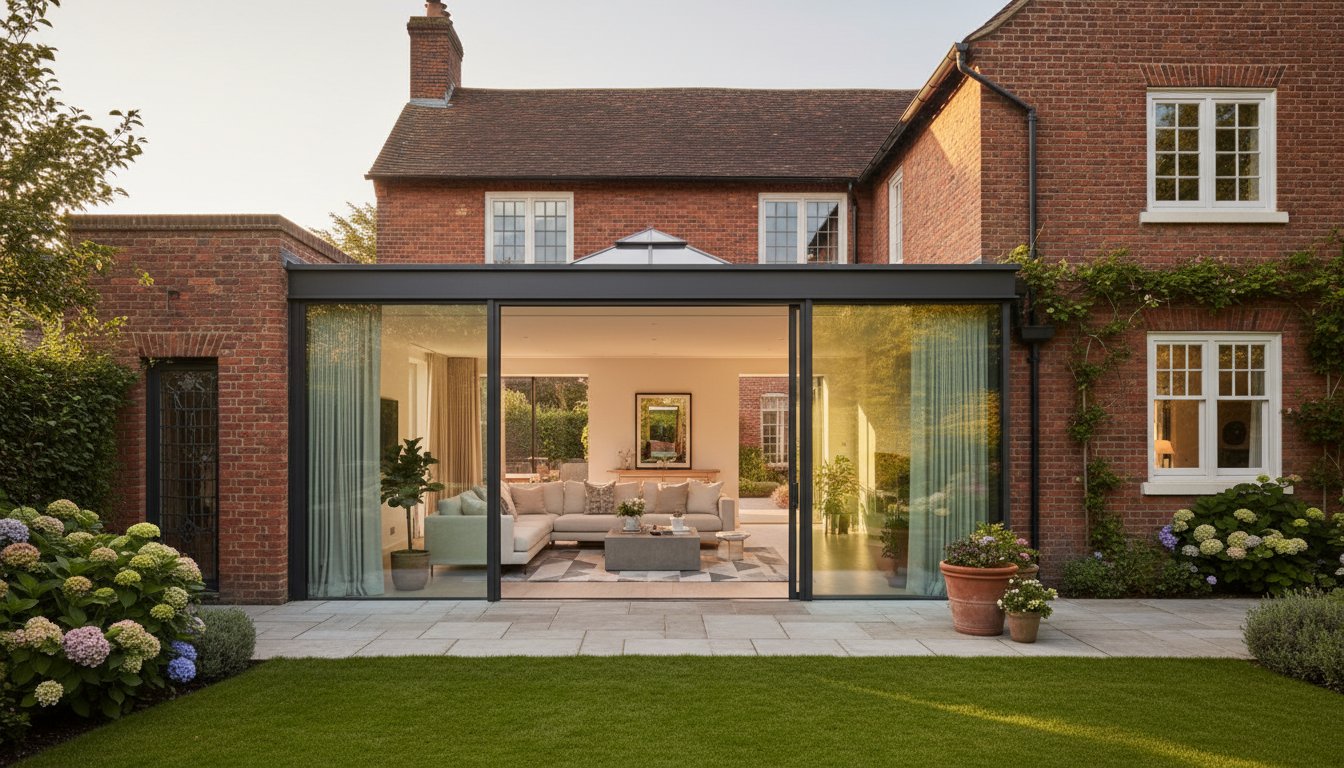
What if the traditional brick extension you're planning is actually the fastest way to make your home feel darker and more disconnected from your garden? Many homeowners across the county start their renovation journey with a solid roof in mind, only to find that it turns their existing living space into a gloomy cave. By choosing architectural glass rooms or integrating flat roof lights for home extensions in Cheshire, you can avoid this common pitfall whilst creating a stunning, modern feature that floods your interior with natural light.
We understand that the anxiety over long builder disruptions and complex planning permission rules can be overwhelming. In this article, you'll discover how a glass-led approach provides a faster installation and fewer red tape hurdles than a standard build. We'll compare the practical benefits and costs, such as the current average of £3,000 per square metre for a glass room, and show you how these designs can increase your property's resale value by up to 7% without the stress of a traditional construction site.
Key Takeaways
- Understand why architectural glass rooms often bypass complex planning permission delays in Cheshire East and Cheshire West, allowing for a much faster project completion.
- Learn how to solve the "borrowed light" problem by using slimline aluminium frames and flat roof lights for home extensions in Cheshire to keep your existing rooms bright and airy.
- Compare the lifestyle benefits of a tidy, exterior-focused installation against the months of dust and disruption typically associated with a traditional brick kitchen extension.
- Discover the latest "Steel-look" and heritage trends that allow you to add modern industrial elegance to traditional Cheshire properties without losing character.
- Identify the best technical glazing options for your specific area, from acoustic glass to dampen noise in busier towns like Runcorn to solar-control glass for south-facing gardens.
Understanding the Glass Room vs. Traditional Extension Debate
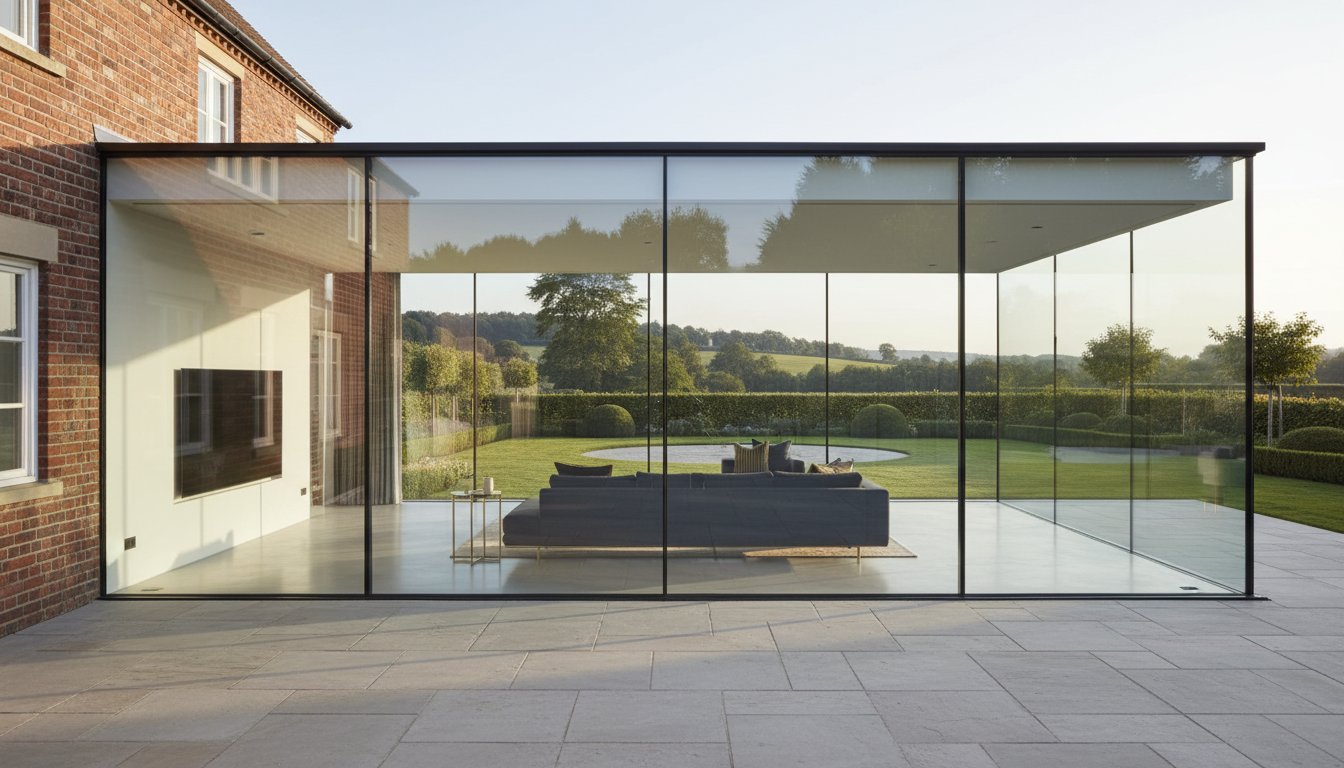
In 2026, Cheshire homeowners are increasingly questioning the logic of the traditional "box" extension. Whilst adding square footage was once the primary goal, the focus has shifted toward the quality of that space. A modern glass room is a high-performance architectural structure that uses ultra-slimline aluminium frames to create a pavilion-style living area. Unlike a standard conservatory, it's designed for year-round use, but it avoids the heavy, closed-in feel of a brick build. Many residents across the county are moving away from solid structures because they've realised that a "permanent" room isn't much use if it lacks life and light.
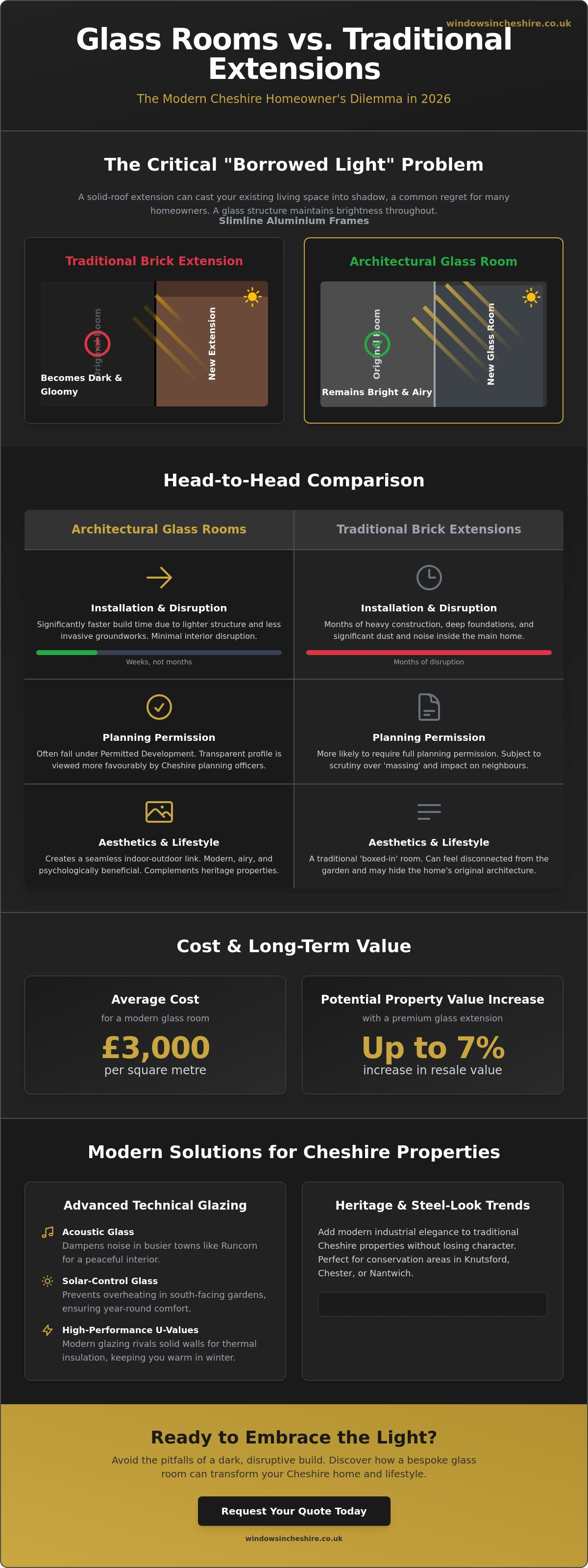
One of the biggest regrets we hear from homeowners who chose brick is the "borrowed light" issue. By attaching a solid-roofed extension to the back of a house, you effectively move the natural light source several metres away. This often leaves existing kitchens or dining rooms feeling dark and gloomy, even in the middle of the day. To combat this, many are now retrofitting flat roof lights for home extensions in Cheshire to regain that lost sunshine. However, a glass room solves this problem from the outset by ensuring every corner of your original home remains flooded with light.
The Core Differences in Structure and Purpose
A traditional extension requires deep, invasive foundations and months of heavy construction. In contrast, glass rooms are significantly lighter structures. This often means less disruptive groundworks and a much faster installation timeline. You might wonder, What is a Sunroom? or a glass room in a modern context? In 2026, the answer lies in thermal performance. Advanced glazing technology now offers U-values that rival solid wall insulation, meaning you don't have to sacrifice warmth for views. It creates a seamless transition where the boundary between your lounge and garden simply disappears.
Why "More Space" Isn’t Always "Better Space"
Living in a "boxed-in" brick extension can feel claustrophobic compared to the airy freedom of a glazed structure. There's a documented psychological benefit to increased natural light, which reduces stress and improves mood. For those owning heritage properties in areas like Knutsford or Tarporley, a glass room is often the best way to preserve the character of the original building. It acts as a transparent addition that doesn't hide the beautiful brickwork or period features of your home. A glass room is a lifestyle-first architectural solution for 2026 that prioritises well-being and aesthetic elegance over mere floor area.
Planning Permission and Speed: The Cheshire Advantage
One of the biggest hurdles for any homeowner in our region is the local planning department. Whether you fall under Cheshire East or Cheshire West and Chester, the rules for traditional brick extensions can be surprisingly rigid. In May 2026, single-storey rear extensions often fall under Permitted Development rights, allowing detached houses to extend up to 4 metres and semi-detached properties up to 3 metres. However, brick builds frequently trigger more scrutiny regarding their "massing" and impact on neighbours. Glass rooms, with their transparent profiles and slimline aluminium frames, are often viewed more favourably by planning officers because they maintain a sense of openness and light.
For those living in heritage hotspots like Knutsford, Chester, or Nantwich, conservation area rules add another layer of complexity. Local authorities often have "Article 4 Directions" in place that remove standard Permitted Development rights. In these sensitive locations, a bulky brick extension can be seen as a threat to the historical character of the street. Our heritage-style glazing and steel-look doors are designed to complement period architecture rather than hide it. This aesthetic sensitivity often makes the approval process smoother than it would be for a solid-walled structure. If you are unsure about your property's status, our technical team can help you navigate the request-a-quote process with expert planning advice.
Bypassing the Planning Red Tape
Glass structures are fundamentally different from brick extensions in the eyes of many local authorities. Because they are classified as lightweight additions, they often bypass the need for full planning permission if they stay under the 4-metre height limit. Even when integrating flat roof lights for home extensions in Cheshire, the "prior approval" process for larger extensions (up to 8 metres for detached homes) is typically more straightforward for glazed designs. This reduces the risk of your project being stalled by months of bureaucratic back-and-forth.
From Concept to Completion in Record Time
The most striking difference between a glass room and a brick extension is the construction timeline. A traditional extension is a logistical marathon that often takes 6 months to complete, involving multiple trades from groundworkers to plasterers. A glass room, by contrast, can be fully installed in as little as 4 weeks. Most of the heavy lifting happens off-site through precision fabrication. This means your garden isn't a building site for half a year.
- Weather Independence: Bricklayers need dry, frost-free days. Our installation teams can continue working on glass structures whilst it rains, ensuring no seasonal delays.
- Digital Efficiency: We use a "WhatsApp for plans" service to give you instant feasibility checks on your project.
- Minimal Disruption: You won't have to live without a kitchen or move out of your home during the build.
If you want to see how quickly your home could be transformed, explore our range of aluminium solutions to find the perfect fit for your lifestyle.
Aesthetic Superiority: Slimline Aluminium vs. Solid Walls
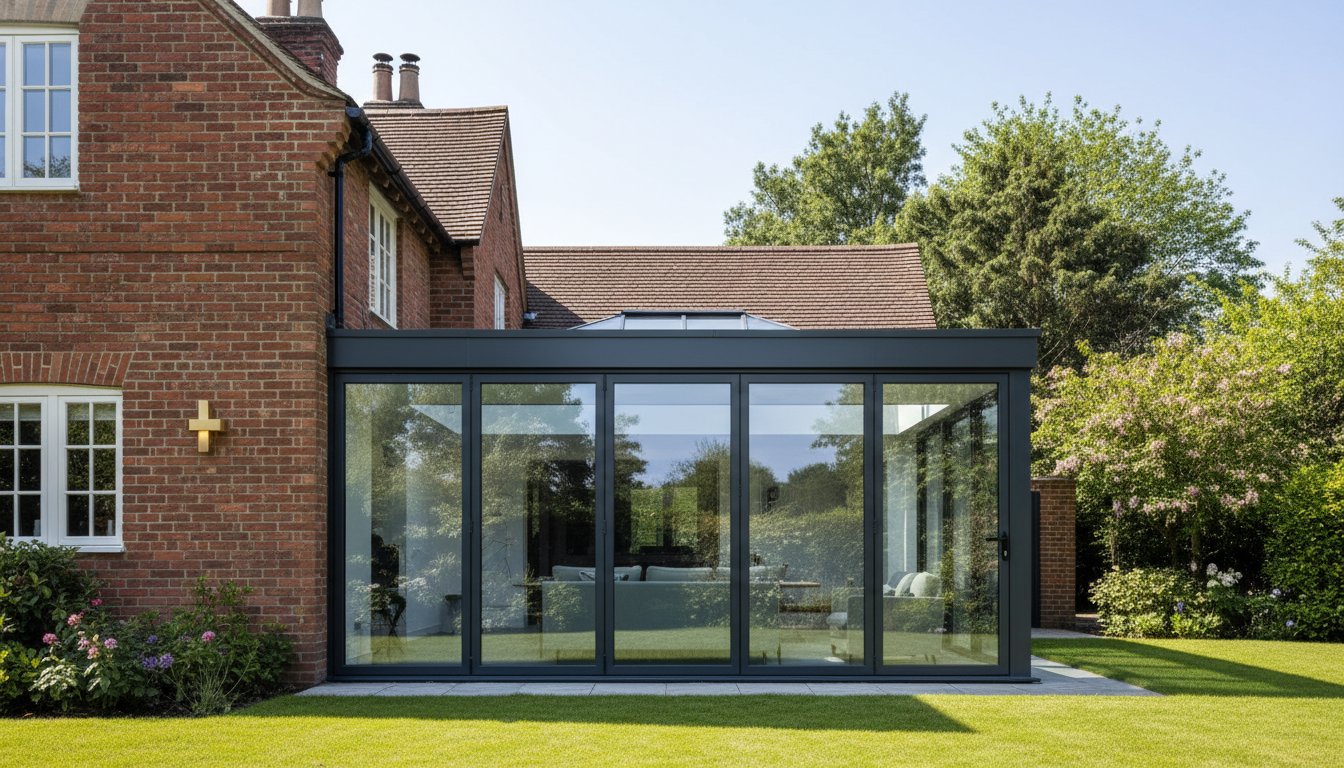
A brick extension can often feel like a heavy, uninspired afterthought that obscures the original beauty of your home. In 2026, the architectural trend has shifted decisively toward "invisible" structures that prioritise elegance over bulk. High-performance glass rooms utilise slimline aluminium profiles that are significantly narrower than traditional brick pillars or uPVC frames. This minimalist approach allows for a bespoke, high-end finish, particularly when you integrate flat roof lights for home extensions in Cheshire. These features do more than just invite the sun; they serve as a modern architectural signature that elevates the entire property's profile.
The Heritage and Steel-Look Aesthetic
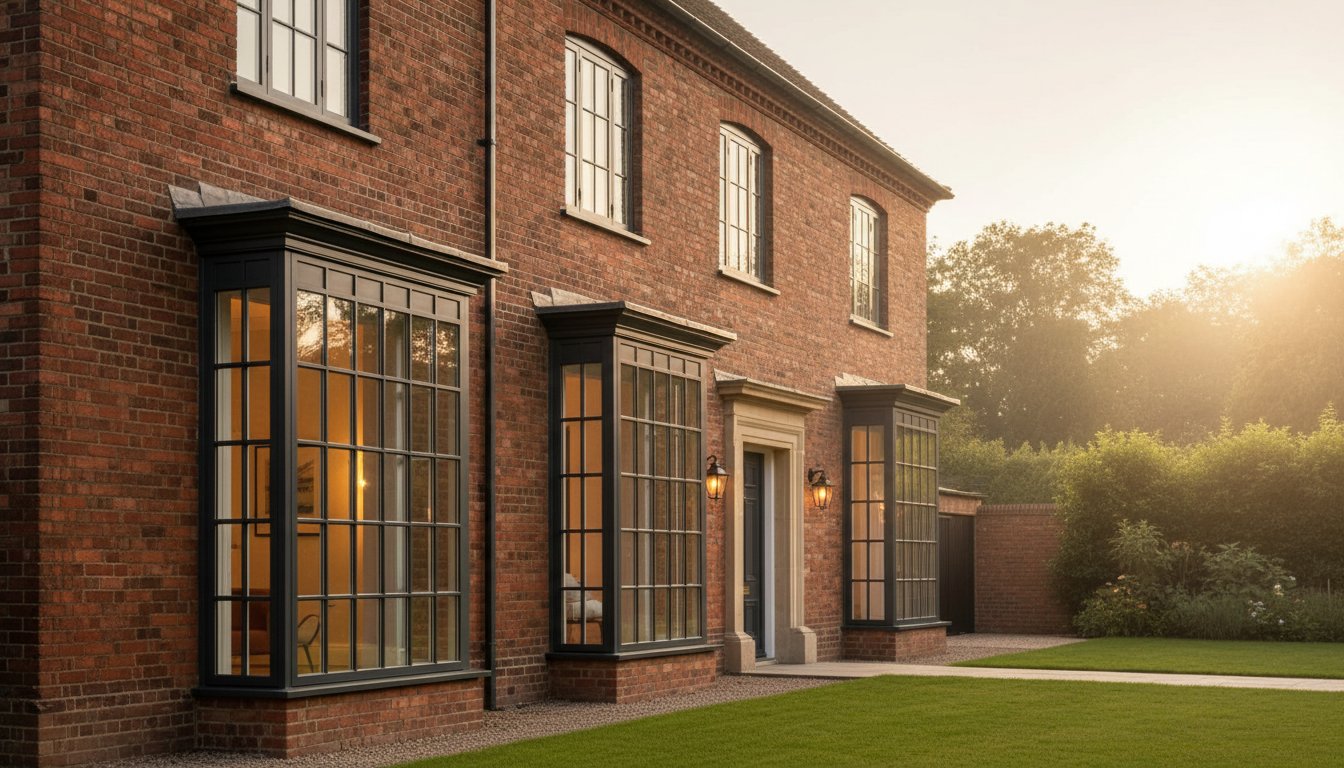
Many homeowners in conservation areas like Knutsford or Tarporley are choosing heritage windows to ensure their new addition respects the soul of their property. The "Steel-Look" aesthetic is particularly dominant this year, offering a sophisticated industrial edge that emulates classic period designs. These slim, black frames provide a stunning visual contrast against traditional red Cheshire brickwork or white-rendered walls. Investing in this style isn't just about personal taste; it's a strategic move for your property's future. Market data from 2026 suggests that homes featuring high-quality, heritage-style glazed features can see a resale value increase of up to 7%. Steel-look doors create a dramatic focal point for your garden, turning a standard transition into a framed work of art.
Framing Your Cheshire Garden
Traditional solid walls act as a barrier, but a glass room acts as a bridge. By replacing bulky brickwork with expansive glass panels, you gain uninterrupted panoramas of your outdoor space. You aren't just looking at your garden; you're effectively living amongst it. To achieve a truly open-plan feel, we recommend integrating wide-span bifold or sliding doors that allow the boundary between your lounge and patio to vanish entirely. This design philosophy works seamlessly for both 200-year-old period cottages and contemporary new-builds in Wilmslow. For a deeper look at how to achieve this balance, explore our Steel Look Windows Cheshire: The 2026 Heritage Style Guide. Unlike standard extensions that can feel boxed-in, these glazed structures ensure your home feels expansive, modern, and deeply connected to its surroundings.
Cost, Disruption, and Long-Term Value
Financial certainty is a rare luxury in home renovation. For many Cheshire homeowners, a traditional brick extension begins with a quote that eventually balloons by 15% due to ground conditions or material shortages. A glass room, by contrast, is a precision-engineered product that typically offers a fixed-price guarantee. When you invest in architectural glazing or flat roof lights for home extensions in Cheshire, you're paying for a finished architectural feature rather than a raw construction project. This avoids the "hidden extras" that plague brick builds, such as multiple skip hires, extensive scaffolding, and the high cost of internal plastering and decorating.
The Hidden Costs of Traditional Building
Beyond the bricks and mortar, a traditional extension carries significant secondary costs. Building control fees in 2026 range between £1,000 and £2,000, and that's before you consider the price of professional decorators or floor layers. Because a glass room is fabricated off-site, these finishing costs are largely eliminated. In high-value areas like Wilmslow and Alderley Edge, the return on investment is particularly strong. Verified 2026 market data shows that a high-specification glass extension can increase property resale value by up to 7%, often outperforming standard brick additions because they offer the "wow factor" that premium buyers demand.
Minimal Disruption to Your Daily Life
The "Builder Disruption Factor" is often the most stressful part of any project. A traditional kitchen extension usually involves knocking through external walls, leaving your home open to the elements and creating a "dead zone" for up to 12 weeks. Our installation process is designed to be tidy and contained. Because we focus on an exterior-led install, our local teams produce 90% less dust and debris than a standard building site. You won't have to move out or live without a functioning kitchen whilst we work.
Maintenance is another long-term value consideration. Whilst brickwork eventually requires repointing and solid roofs need tile repairs, high-performance aluminium is practically maintenance-free. Our 2026 solar-control glass also helps reduce heating bills by trapping warmth in winter and reflecting heat in summer. If you're ready to add value to your home without the months of mess, get a fixed-price consultation from our technical team today.
Choosing Your Perfect Glass Room in Cheshire
Selecting the right glazed structure is about more than just adding floor space; it's about defining how you want to live. Before you start, identify your primary goal. Are you envisioning a tranquil garden office in Sandbach, a social dining hub in Warrington, or a light-filled lounge in Crewe? Your objective dictates the technical specification. For instance, if your property is south-facing, solar-control glazing is essential to prevent the "greenhouse effect" during peak summer months. Conversely, if you live near busier routes in Runcorn, acoustic glazing can reduce external noise by up to 45 decibels, ensuring your sanctuary remains peaceful. Integrating high-performance flat roof lights for home extensions in Cheshire ensures that even the deepest parts of your floor plan stay bright whilst maintaining the thermal efficiency required by 2026 building regulations.
Bespoke Features for Your Lifestyle
Modern glass rooms in 2026 offer sophisticated technology that goes far beyond traditional conservatories. You can now choose smart glass that tints at the touch of a button or automated shading solutions that react to the sun's position throughout the day. The configuration of your doors is equally vital to the room's flow. Large-format sliding doors provide uninterrupted views with fewer vertical frames, creating a "picture frame" effect for your garden. If you prefer to remove the boundary between indoors and outdoors entirely, bifold doors allow you to fold the glass away on warm days. To explore these technical options further, you can request a bespoke quote for your Cheshire home and speak with our design consultants.
The Windows in Cheshire Difference
Choosing a local specialist is the only way to ensure your project respects the specific architectural nuances of our county. We bring deep local knowledge of building styles across the region, ensuring your new room feels like a natural evolution of your property rather than a bolt-on. Our expertise in Premium Aluminium Windows in Cheshire allows us to match frame colours and slimline profiles perfectly to your existing heritage or modern glazing. We don't believe in high-pressure sales; instead, we act as a "safe pair of hands" to guide you through the technical requirements and planning hurdles.
To ensure your project gets off to the best possible start, follow this final 2026 homeowner checklist:
- Confirm Property Status: Check if you are in a conservation area or have an Article 4 Direction.
- Define Function: Decide if the space needs specific acoustic or solar-control glazing.
- Door Selection: Choose between bifold or sliding doors based on your patio furniture layout.
- Digital Feasibility: Use our "WhatsApp for plans" service to get an instant expert opinion on your project's viability.
By focusing on these practical steps, you can create a stunning architectural feature that transforms your home and enhances your lifestyle for years to come.
Start Your Cheshire Home Transformation Today
Choosing a glass room isn't just about adding floor space; it's about investing in a lifestyle that prioritises light and modern elegance. By bypassing the six month disruption of a traditional build, you can enjoy a stunning, high performance addition in as little as four weeks. These structures don't just preserve the character of your property; they enhance it through heritage style glazing and slimline frames that solid brick walls simply cannot match.
Integrating flat roof lights for home extensions in Cheshire ensures your existing rooms remain bright and welcoming year round. Our expert local teams are specialists in steel look designs and heritage aesthetics, ensuring every project meets the highest standards. As a Fensa registered installer, we provide total peace of mind whilst delivering a seamless transition between your home and garden.
Ready to open up your home? Request a bespoke quote and send us your plans today to see how we can transform your property. We look forward to helping you create your perfect garden sanctuary.
Frequently Asked Questions
Do I need planning permission for a glass room in Cheshire?
Many glass rooms fall under Permitted Development rights in 2026, meaning they don't require full planning permission. For detached homes, you can usually extend up to 4 metres, whilst semi-detached properties have a 3 metre limit. However, if you live in a conservation area like Knutsford or Chester, an Article 4 Direction might apply. It's always best to check with your local authority or our technical team before starting any groundworks.
Will a glass room be warm enough to use in the winter?
Modern glass rooms are designed for year-round use thanks to advanced thermal performance. In 2026, building regulations require new flat roofs to have a U-value of 0.15 W/m²K, ensuring excellent heat retention. By using high-performance solar-control glass, your room stays cosy in the winter and comfortable during the summer months. This technology effectively rivals the insulation levels found in traditional solid wall extensions.
How much does a glass room cost compared to a brick extension?
A glass room typically costs around £3,000 per square metre in the Cheshire area as of May 2026. Whilst this is a premium investment, it often provides better value than brick because it includes the final finish. A traditional extension requires separate quotes for plastering, painting, and lighting. Additionally, integrating flat roof lights for home extensions in Cheshire can offer a similar high-end aesthetic at a lower total project cost.
Is a glass room more secure than a traditional extension?
Glass rooms are exceptionally secure and feature toughened safety glass as standard. Our aluminium frames are engineered for strength and fitted with multi-point locking systems that meet modern security standards. Unlike older conservatories, these structures are robust architectural additions. They provide the same level of protection as a brick build, giving you total peace of mind for your home and family in 2026.
How long does it take to install a glass room?
You can expect a glass room installation to be completed in approximately 4 weeks. This is significantly faster than the 6 months typically required for a traditional brick extension. Because the components are precision-fabricated off-site, the on-site construction time is minimised. This reduces the disruption to your daily life and ensures your garden isn't a building site for an entire season.
Can I use heritage-style doors in a modern glass room design?
Heritage-style doors are a perfect match for modern glass rooms and are a key trend for 2026. Our steel-look aluminium doors provide a slim, industrial aesthetic that complements both period cottages and contemporary builds. These doors offer the classic look of traditional steel but with the superior thermal performance and durability of modern aluminium. They act as a stunning focal point for any glazed extension.
What maintenance is required for an aluminium glass room?
Aluminium glass rooms are incredibly low-maintenance compared to timber or brick structures. The durable powder-coated finish on the frames doesn't require repainting or staining; a simple wipe down with soapy water once or twice a year is sufficient. Unlike brickwork, there is no risk of mortar crumbling or dampness penetrating solid walls. This makes it a practical, long-term solution for busy Cheshire homeowners.
Does a glass room add as much value to my home as an extension?
A high-quality glass room can increase your property's resale value by up to 7% in 2026. Whilst a brick extension adds floor area, a glass room adds a unique architectural "wow factor" that premium buyers in areas like Wilmslow often look for. By installing flat roof lights for home extensions in Cheshire, you create a bright, modern space that feels more expensive and desirable than a standard dark room.