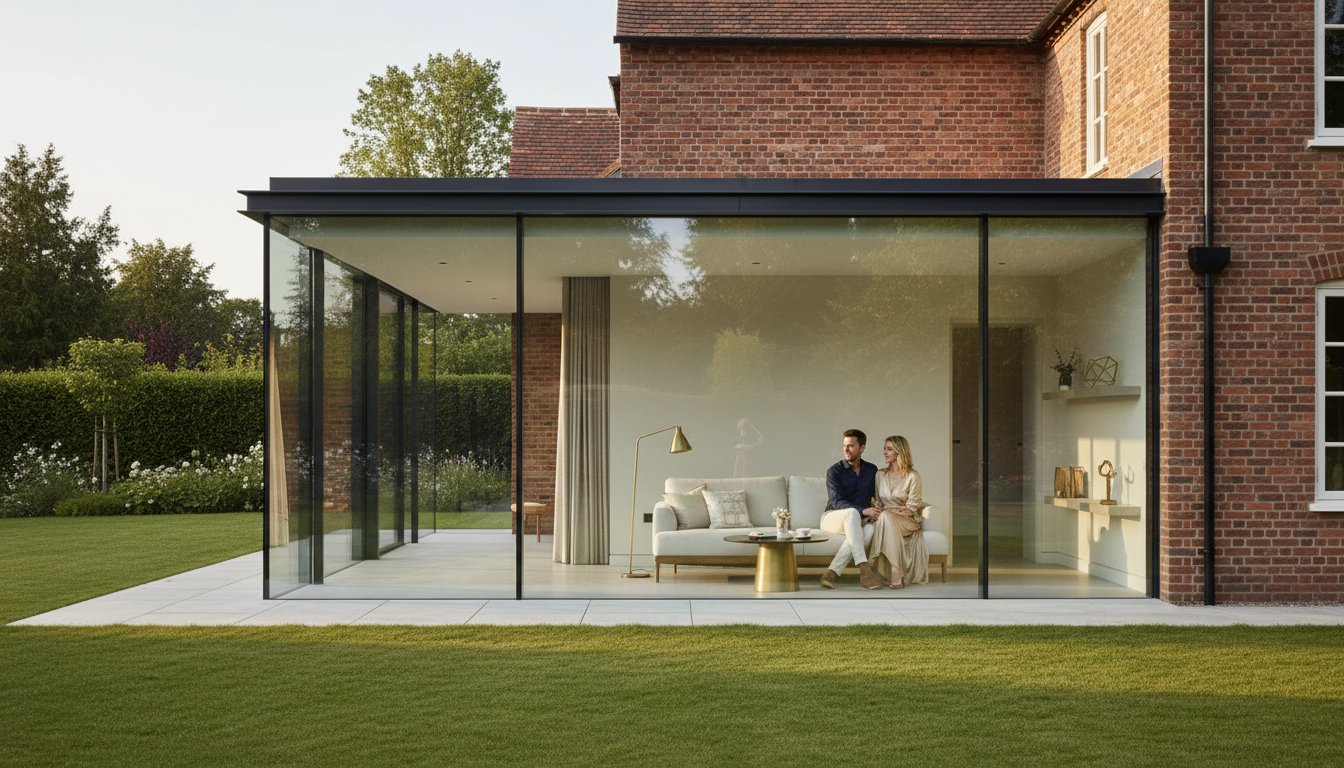
Could your dream extension actually become an unusable furnace by July? Many homeowners in Knutsford and Wilmslow hesitate to invest in architectural glazing because they fear the "greenhouse effect" associated with older designs. You want a space that feels like a natural, high-end part of your home, not a seasonal compromise. By integrating advanced flat roof lights Cheshire residents can now achieve a seamless indoor-outdoor transition that remains perfectly temperate regardless of the unpredictable British weather.
We understand that navigating strict conservation area rules and the updated 2026 building regulations can feel like a daunting task. This guide promises to simplify the technicalities, showing you how to meet the mandatory 1.2 W/m²K U-value for thermal performance whilst maximising natural light. We'll preview the essential differences between slimline bifold and sliding configurations, explain Permitted Development rights for your specific postcode, and demonstrate how a well-executed glass room can increase your property value by approximately 5% in the current market.
Key Takeaways
- Understand how modern flat roof lights Cheshire transform traditional extensions into high-performance architectural statements that blend seamlessly with your existing property.
- Master the technical requirements of the 2026 Building Regulations, ensuring your new space meets the mandatory 1.2 W/m²K thermal performance for year-round comfort.
- Navigate the complexities of planning permission in historic areas like Knutsford and Wilmslow by identifying if Article 4 Directions apply to your specific project.
- Learn how to choose the perfect configuration of bifold doors or "Steel-look" dividers to enhance the flow and functionality of your luxury living area.
- Evaluate the long-term financial benefits, including how bespoke architectural glazing can add approximately 5% to your property's value in the Cheshire market.
Defining the Modern Glass Room: Why Flat Roof Lights Cheshire are Trending
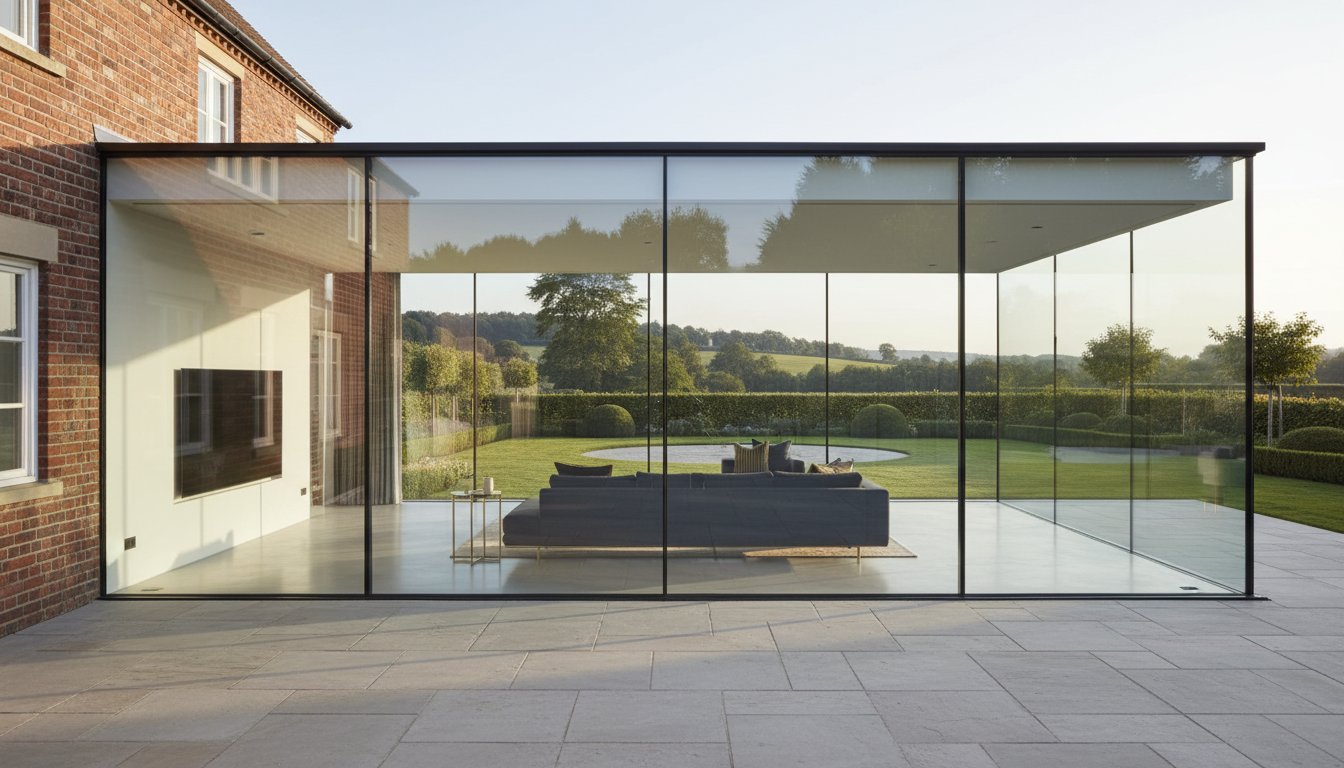
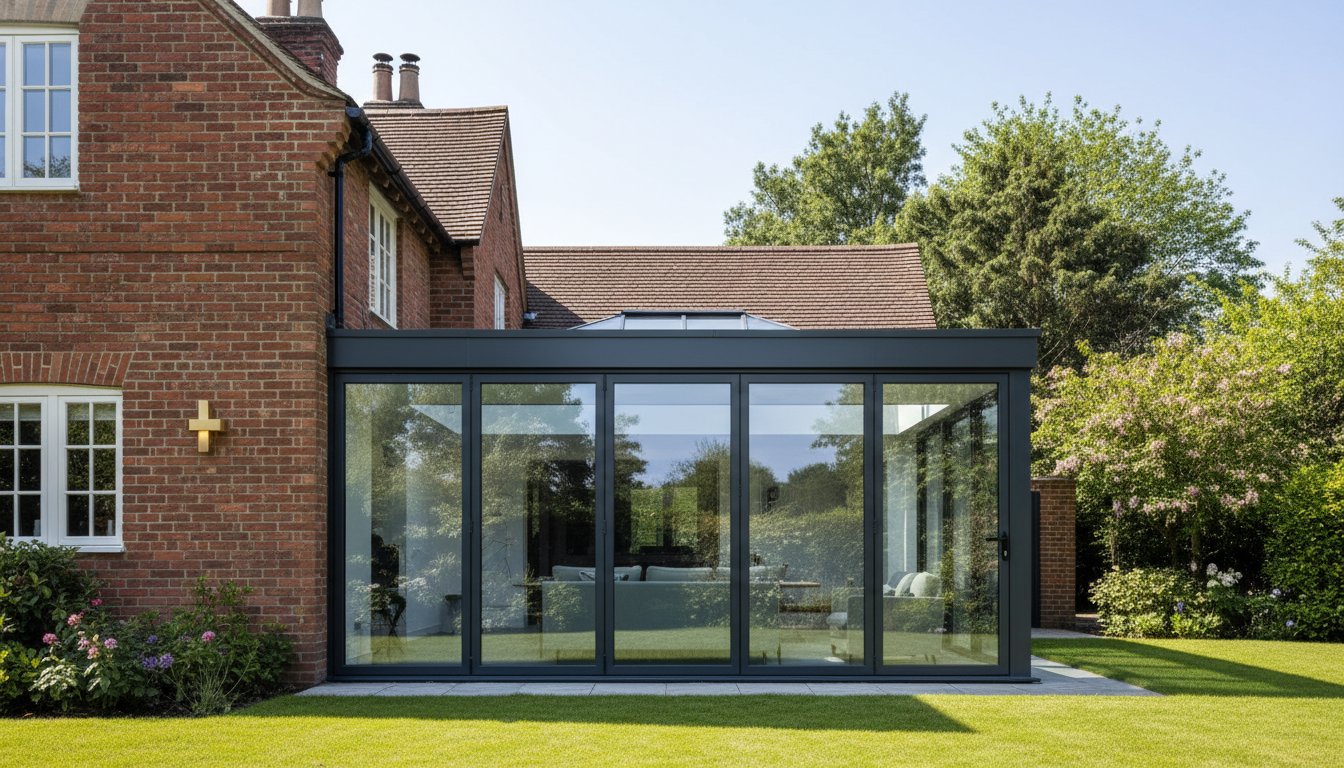
The traditional conservatory, once a staple of the British garden, has undergone a radical transformation. In 2026, homeowners are moving away from bolt-on plastic structures in favour of integrated glass rooms that function as permanent, high-performance living spaces. This shift is particularly visible in Alderley Edge and Prestbury, where architectural glazing is used to create sophisticated "broken-plan" layouts. Unlike the open-plan trend of the previous decade, broken-plan living uses structural glass and flat roof lights Cheshire to define distinct zones while maintaining a sense of flow and connection to the garden.
By prioritising the practice of daylighting, these modern extensions do more than just add floor space. They improve wellbeing by flooding the home's core with natural light, even on the greyest North West afternoons. You can choose between frameless glass-to-glass joins for a purely minimalist look or slimline aluminium frames that offer a crisp, contemporary silhouette. This design flexibility is a key reason why private housing repair and maintenance output is forecast to grow by 3.0% in 2026, as families choose to "improve not move."
Glass Room vs. Conservatory: The 2026 Distinction
A modern glass room is built with the same structural integrity as a traditional brick extension. While older conservatories often suffered from flimsy roofing and poor insulation, 2026 designs utilise high-spec marine-grade aluminium. This material is essential for Cheshire weather resistance, ensuring frames don't warp or corrode over time. Visually, the difference is striking. Instead of bulky uPVC rafters, flat roof lights Cheshire offer minimal sightlines that disappear into the ceiling, creating a seamless view of the sky. Our technical team ensures every installation meets the latest structural safety standards, providing a "safe pair of hands" for your investment.
Aesthetic Integration for Cheshire Properties
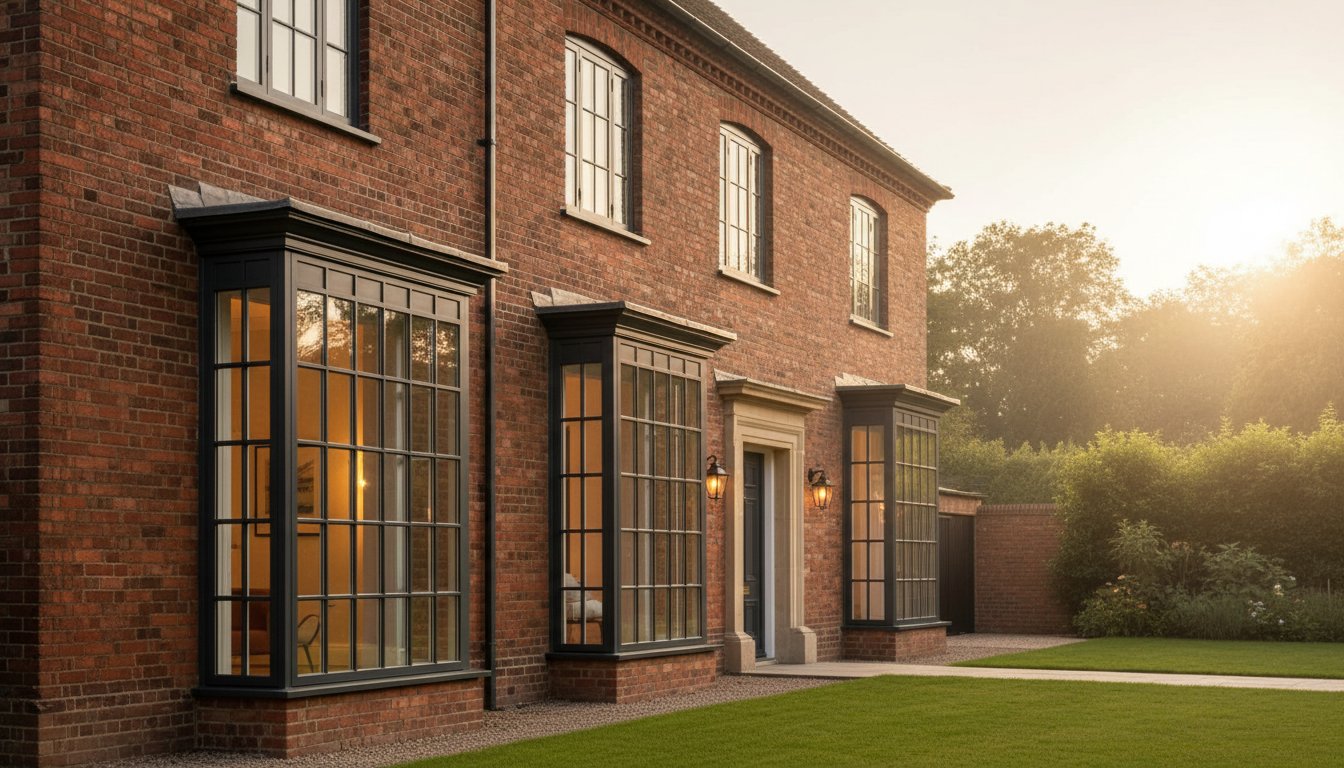
Cheshire’s diverse architecture requires a bespoke approach to glazing. For traditional Chester sandstone properties, we often pair flat roof lights with Heritage French Doors to maintain a classic aesthetic whilst introducing modern performance. In Northwich, barn conversions benefit from the low-profile nature of these installations. They brighten deep-plan interiors without disrupting the original roofline. Because many of these projects fall under Permitted Development rights, provided they don't project more than 150mm from the roof plane, they offer a faster route to transformation than traditional extensions. Whether you are in a Wilmslow conservation area or a modern Knutsford development, the goal is a seamless blend of old and new.
Thermal Performance: Will Your Glass Room Be Too Cold in Winter?
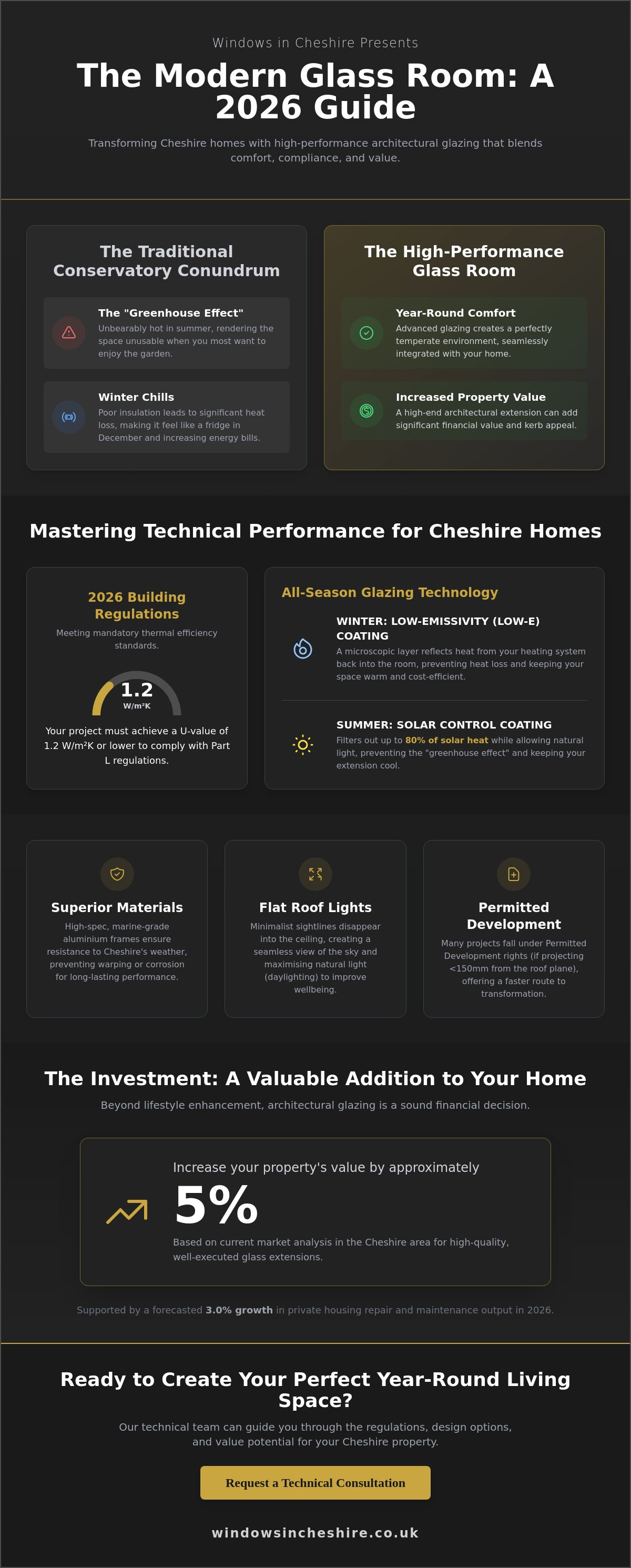
Many Cheshire homeowners remember the old-style conservatories that felt like a fridge in December and a furnace in August. In 2026, advanced glazing technology has completely solved this issue. High-performance flat roof lights Cheshire installations now utilise Low-Emissivity (Low-E) glass to reflect heat back into your living space. This microscopic coating ensures your extension remains a comfortable, temperate environment even when the frost hits the North West. By combining this with modern underfloor heating, your glass room becomes a seamless, year-round part of your home's footprint.
Solar control is equally vital for those bright summer days. Contemporary solar-reflective coatings can filter out up to 80% of solar heat while still allowing natural light to flood the room. This prevents the "greenhouse effect" that once plagued glass extensions. When you choose the right glass specification for your garden's orientation, you create a space that is as practical as it is stunning. If you are unsure which glazing suits your property, you can request a quote to speak with our technical team about your specific plans.
Understanding U-Values and 2026 Building Regulations
A U-value is the measure of heat loss through architectural glazing. The 2026 update to Building Regulations, specifically Part L, has introduced stricter standards to improve energy efficiency. For replacement flat roof lights Cheshire, the maximum permitted whole-unit U-value is now 1.2 W/m²K. If you are working on a completely new build, the limit is 1.6 W/m²K. Whilst double glazing is often enough to meet these targets, triple glazing is a growing trend for 2026. It offers superior thermal performance and significant noise reduction, which is a major benefit for homes near busy routes in Wilmslow or Alderley Edge. You can find more details on how these standards apply to your project in the official government guidance regarding glazed structures.
Managing Solar Gain and Natural Ventilation
Stagnant air is the enemy of a comfortable glass room. We often recommend integrating automated roof vents with built-in rain sensors. These smart systems monitor internal temperatures and open automatically to encourage natural air circulation, closing the moment they detect a Northwich rain shower. Your garden's orientation plays a huge role here; a south-facing garden requires much higher solar control than a north-facing one. To manage light levels effectively, many homeowners now opt for integrated blind systems. These are sealed within the glass units, meaning they stay dust-free and allow you to organise your privacy with the touch of a button.
Planning Permission for Flat Roof Lights in Cheshire Conservation Areas
Cheshire’s planning landscape is famously complex. Whilst many national installers claim that glazing projects automatically fall under Permitted Development, the reality in towns like Knutsford and Wilmslow is often different. Many historic parts of these areas are subject to Article 4 Directions. This means the local council has removed certain Permitted Development rights to protect the character of the neighbourhood. Even a small installation of flat roof lights Cheshire may require a full planning application if your home sits within a designated conservation zone. Working with a local team that understands the specific nuances of Cheshire East or Cheshire West and Chester councils is essential for a smooth approval process.
FENSA certification plays a vital role beyond just the installation phase. When you eventually come to sell your property, solicitors will require proof that your architectural glazing complies with the latest Building Regulations for thermal performance. Having the correct paperwork, including a Lawful Development Certificate (LDC) where applicable, prevents delays during the conveyancing process and protects your investment. It’s about more than just aesthetics; it’s about ensuring your home remains a legally compliant and valuable asset.
When is Planning Permission Required?
For most suburban homes, you don't need planning permission if the rooflight doesn't project more than 150mm from the existing roof plane and is no higher than the highest part of the roof. However, if you live in a Grade II listed building or a heritage zone in Nantwich, different rules apply. You'll likely need Listed Building Consent for any external changes. Preparing high-quality architectural drawings that clearly show the slimline profile of modern aluminium frames helps satisfy local planning officers, as these designs are far less intrusive than traditional, bulky alternatives.
Building Regulations and Structural Safety
Every installation must meet strict safety standards, regardless of whether you need planning permission. Modern glass rooms often feature large-scale architectural glass panels that require substantial structural support. Our technical team assesses whether your existing foundations or new steelwork can handle the weight of high-spec triple glazing. There's also the matter of thermal separation. If your glass room is open to the rest of the house, it must meet the same energy standards as a standard room to prevent heat loss. You can learn about our professional installation standards to see how we manage these technical requirements. We ensure every project is a "safe pair of hands" from the first drawing to the final FENSA sign-off.
Configurations and Synergy: Matching Your Lifestyle and Aesthetic
A glass room is more than the sum of its parts. To achieve a truly high-end finish, you must consider how your choice of flat roof lights Cheshire interacts with your floor-level glazing. In 2026, we are seeing a significant rise in the use of "Steel-look" internal dividers. These slimline aluminium frames allow you to create a multi-functional space, perhaps a quiet home office separated from a vibrant kitchen, without sacrificing the flow of natural light. This "broken-plan" approach ensures your extension remains versatile as your lifestyle evolves.
Frame colour is another critical decision. Whilst Anthracite Grey remains a contemporary favourite, many homeowners in heritage areas now opt for "Heritage Black" or "Agate Grey" to complement existing timber windows. Using marine-grade powder coating ensures these colours stay vibrant for decades, even in the face of the North West's unpredictable weather. To keep your architectural glass pristine amongst the Cheshire elements, we recommend a simple maintenance routine. Whilst self-cleaning coatings break down organic dirt, a biannual rinse with warm soapy water keeps the slimline frames looking as good as the day they were installed.
Bifold Doors for Maximum Garden Integration
Bifold doors are the ultimate choice for homeowners who want to erase the boundary between their home and garden. By using a "floating corner" post, we can remove structural barriers entirely, allowing the roof to appear as if it is hovering over your patio. This configuration is particularly effective in smaller gardens in Warrington or Sandbach, where every square metre of perceived space counts. When the doors are fully retracted, your glass room becomes an outdoor pavilion. You can explore our range of premium bifold doors to see how these systems can be tailored to your specific layout.
Large-Format Sliding Doors for Rural Views
If your property overlooks the Cheshire plains or the Peak District, large-format sliding doors are often the superior choice. Unlike bifolds, which have more vertical frames, sliding doors offer expansive panes of glass that provide an uninterrupted "picture frame" view even when closed. The technical evolution of lift-and-slide mechanisms means that even the heaviest triple-glazed panels can be moved with a single finger. This synergy between flat roof lights Cheshire and sliding glass creates a space that feels deeply connected to the landscape. Feel free to view our bespoke sliding door solutions to find the perfect match for your rural renovation.
If you are ready to see how these configurations could transform your property, contact our local team for a consultative design review.
The Value Proposition: ROI on High-End Architectural Glazing
Investing in a glass room is a strategic financial decision as much as a lifestyle upgrade. In the Cheshire Golden Triangle, where the average house price in Cheshire East reached £294,000 in February 2026, architectural quality is a significant market differentiator. Data indicates that a 10% increase in floor space through a high-quality extension can add approximately 5% to the total value of a typical home. When these projects include a modern kitchen renovation, they often yield a 60-80% return on investment. By choosing premium flat roof lights Cheshire, you are not just adding light; you are securing a "turnkey" feature that appeals to the most discerning buyers.
Long-term durability is the cornerstone of this value. High-end aluminium systems are engineered to withstand the North West elements without the warping or discolouration often seen in cheaper alternatives. Bespoke aluminium systems outperform off-the-shelf kits in resale value because they offer superior longevity, custom colour matching, and the ultra-slim sightlines that modern buyers demand. This professional finish ensures your home remains a premium asset for decades.
Resale Appeal in Wilmslow, Alderley Edge, and Knutsford
The property market in 2026 shows a clear trend: buyers favour "turnkey" luxury extensions that require no immediate remedial work. A glass room that already complies with the 1.2 W/m²K thermal standards of Part L Building Regulations provides immense peace of mind for future owners. For those renovating heritage properties, our Steel Look Windows Cheshire: The 2026 Heritage Style Guide explains how to maintain classic aesthetics whilst boosting modern performance. This attention to detail ensures your home stands out amongst more traditional listings in Wilmslow or Knutsford.
Starting Your Project with Windows in Cheshire
Moving from inspiration to reality requires a technical-first approach. Our local fitting teams serve Crewe, Runcorn, and the wider county, providing a "safe pair of hands" for your installation. We understand that the first step can often feel overwhelming, so we've modernised the consultation process. You can use our WhatsApp service to send your architectural plans or photos directly to our technical team for a rapid assessment. This efficiency ensures your project starts with accurate data and professional insight.
Ready to see how architectural glazing can transform your living space? Request a bespoke quote for your flat roof lights today and take the first step toward a brighter, more valuable Cheshire home. Our local experts are ready to guide you through every technical detail, from the initial site survey to the final FENSA sign-off.
Start Your Cheshire Home Transformation
Creating a modern glass room is a significant investment that requires both architectural vision and technical precision. By integrating high-performance flat roof lights Cheshire, you ensure your new extension meets the strict 1.2 W/m²K thermal standards required by the 2026 Part L Building Regulations. This approach guarantees a space that remains comfortable throughout the year, whether you are hosting a summer garden party in Wilmslow or enjoying a quiet, frost-free morning in Knutsford.
Since 2020, Windows in Cheshire has provided local homeowners with expert guidance on navigating complex planning permissions and choosing the perfect door configurations. Our local teams offer full-service project management, taking your vision from a simple site survey to a fully FENSA-certified reality. We specialise in the latest aluminium glazing technology, ensuring every installation is as durable as it is stunning.
Don't let technical uncertainty stall your renovation plans. Send us your plans via WhatsApp or request a bespoke quote today to see how we can maximise light in your property. We look forward to helping you create a seamless, luxury living space that adds lasting value to your Cheshire home.
Frequently Asked Questions
Will a glass room add significant value to my home in Cheshire?
Bespoke glass rooms are highly prized in the local property market and can add approximately 5% to your home's total value. Buyers in the Cheshire Golden Triangle specifically seek out turnkey architectural features that integrate the garden into the primary living area. This investment differentiates your property from standard extensions by providing a unique, high-end aesthetic that appeals to discerning North West buyers.
Do I need planning permission for flat roof lights in a conservation area?
You should always consult with Cheshire East or Cheshire West and Chester councils, as Article 4 Directions in towns like Knutsford often override standard Permitted Development rights. Whilst standard flat roof lights Cheshire installations often bypass full permission elsewhere, a conservation designation usually requires a formal application. We recommend obtaining a Lawful Development Certificate to ensure your project is fully documented for any future property sale.
Will my glass room extension be too hot during the summer?
Your extension will remain perfectly temperate if you specify solar control glazing. This technology reflects up to 80% of solar heat away from the glass whilst maintaining high light transmission for a bright interior. Combining this with automated roof vents ensures a constant flow of fresh air, preventing the uncomfortable "greenhouse effect" that plagued older conservatory designs.
Is a glass room more expensive than a traditional brick extension?
Costs are generally comparable to a high-quality brick extension, with prices in the North West starting from approximately £2,000 per square metre. Whilst the architectural glass itself is a premium component, you often save on internal finishing costs such as plastering, painting, and extensive electrical work. The precision of aluminium frame assembly also reduces the total time contractors need to spend on your site.
How do I maintain and clean high-level flat roof lights?
Most homeowners opt for self-cleaning glass, which features a microscopic coating that uses UV light to break down organic dirt. This debris then washes away naturally during rainfall, keeping your view clear with minimal effort. For the slimline aluminium frames of your flat roof lights Cheshire, a simple wipe with warm soapy water every six months is sufficient to protect the durable, marine-grade powder-coated finish.
Can I use a glass room as a permanent home office in Wilmslow?
A modern glass room is an ideal permanent office, provided it complies with the latest 2026 Building Regulations regarding thermal performance. The abundance of natural daylight is proven to boost productivity and improve mental wellbeing during the working day. If your Wilmslow property is located near a busy route, triple glazing can also provide the necessary acoustic insulation for a quiet, professional environment.
How long does the installation of a bespoke glass room usually take?
The on-site build typically takes between 4 and 6 weeks once the foundations and any necessary structural openings are prepared. You should also factor in a lead time of roughly 8 to 12 weeks for the bespoke fabrication of your aluminium frames and high-spec glass units. This ensures every component is precision-engineered to the exact requirements of your technical site survey.
Are modern architectural glass rooms secure against intruders?
Modern glass rooms are exceptionally secure and are engineered to meet or exceed PAS 24 security standards. We use toughened or laminated safety glass that is incredibly difficult to break, even with significant force. When paired with the multi-point locking systems found on our bifold and sliding door ranges, your glass room is just as secure as any traditional part of your home.